Jan 10, 2017

Daily Current Affairs for Competitive Exams: January 6, 2017

Veteran actor Om Puri passes away at the age of 66
  • Actor Om Puri passes away at the age of 66 due to a cardiac arrest in Mumbai, on January 6, 2016. He was credited for being part of parallel, new-wave cinema along with Naseeruddin Shah, Shabana Azmi and Smita Patil that brought change in the film industry back in the 1980s.
Highlights:
  • He was born on October 18, 1950 in Ambala, Haryana. He was one of the prominent names of parallel cinema that changed Indian cinema in the 1980s.
  • He made his debut in films in a marathi film Ghashiram Kotwal in 1972. He had studied acting in India’s two of the most prestigious acting schools of the country- National School of Drama (NSD) and Film and Television Institute of India (FTII).
  • He is remembered for his outstanding performances in films like Bhavni Bhavai (1980), Sadgati (1981), Ardh Satya (1982), Mirch Masala (1986) and Dharavi (1992). His last appearance was in a Pakistani comedy film, Actor in Law, which had released in September 2016.
  • He also had lent his voice for the character of Bagheera in The Jungle Book.
Earth like snow patterns found on Pluto, claim researchers
Using a model similar to what meteorologists use to forecast weather and a computer simulation of the physics of evaporating ices, scientists have found evidence of snow and ice features, known as “penitentes”, on Pluto. Until now, these had only been seen on the Earth.
 Highlights:
  • Penitentes are snow and ice features formed by erosion that, on the Earth, are characterised by bowl-shaped depressions with blade-like spires around the edge that rise up to several metres. Until now no penitentes have been identified conclusively on planetary bodies other than the Earth.
  • The new research, published in the journal Nature, indicates that these icy features may also exist on other planets where environmental conditions are similar.
  • Though Pluto’s environment is very different from the Earth’s — it is much colder, the air much thinner, the sun much dimmer and the snow and ice on the surface are made from methane and nitrogen instead of water — the same laws of nature apply.
  • The identification of these ridges in Pluto’s informally named Tartarus Dorsa area suggests that the presence of an atmosphere is necessary for the formation of penitentes, which would explain why they have not previously been seen on other airless icy satellites or dwarf planets.
  • The research team compared its model to ridges on Pluto imaged by NASA’s New Horizons spacecraft in 2015. Pluto’s ridges are much larger — about 500 metres tall and separated by about three to five kilometres — than their earthly counterparts.
  • This gargantuan size is predicted by the same theory that explains the formation of these features on the Earth.
First Wind Power auction to conducted in India
  • The country would have its first auction of wind power projects, but with no surety on power purchase and lack of evacuation infrastructure. Developers are likely to hedge risks by quoting higher tariff. Projects worth 1,000 Mw will go under hammer, but there is no surety of off-take the Centre has not tied up with any state for power sale. Some of the leading companies in the sector are Suzlon, Hero Future Energies, Sembcorp India, ReNew Power, Gamesa India.
Highlights
  • According to industry estimates, the tariff will be around Rs 4.5-4.8 per unit against the government’s claim of Rs 4 per unit.
  • Till now, wind power projects were offered under the feed-in tariff model, with states signing for power procurement with the developer for a singular tariff for 25 years.
  • Solar Energy Corporation of India (SECI) has been designated as the nodal agency for implementing this scheme. 
  • Power Trading Corporation of India has been selected by SECI for purchase and sale of wind power after entering into a power-purchase agreement for 25 years with the successful bidders.
  • The responsibility of getting the inter-state transmission system (ISTS) connectivity and long-term access (LTA) lie entirely with the wind project developer. 
  • For getting LTA, a developer needs to submit the power injection and drawl point. In this case, however, there is no information on the drawl point as the developers don’t know which state will procure. Even taking the connection till the nearest sub-station is also not shared. 
  • The tender document states the “Central Transmission Utility (CTU) may provide the details of ISTS substation of the windy states with indicative information on the total installed transformation capacity and capacity available in MVA which can be injected/evacuated from these substations at a particular time.”
  • PGCIL is also the CTU. Green corridors are an alternative transmission network for wind power projects.
India and Kazakhstan sign Protocol to amend the Double Taxation Avoidance Convention
  • India and Kazakhstan signed a Protocol to amend the existing Double Taxation Avoidance Convention (DTAC) between the two countries which was earlier signed on December 9, 1996 for the prevention of fiscal evasion with respect to taxes on income.
Highlights:
  •  The Protocol provides internationally accepted standards for effective exchange of information on tax matters. Further, the information received from Kazakhstan for tax purposes can be shared with other law enforcement agencies with authorisation of the competent authority of Kazakhstan and vice versa.
  • The Protocol inserts a Limitation of Benefits Article, to provide a main purpose test to prevent misuse of the DTAC and to allow application of domestic law and measures against tax avoidance or evasion. 
  • The Protocol inserts specific provisions to facilitate relieving of economic double taxation in transfer pricing cases. This is a taxpayer friendly measure and is in line with India’s commitment under Base Erosion and Profit Shifting (BEPS) Action Plan to meet the minimum standard of providing Mutual Agreement Procedure (MAP) access in transfer pricing cases. 
  • The Protocol inserts service PE provisions with a threshold and also provides that the profits to be attributed to PE will be determined on the basis of apportionment of total profits of the enterprise. 
  • The Protocol replaces existing Article on Assistance in Collection of Taxes with a new Article to align it with international standards.

Life in RRB NTPC: For Job profiles, Promotions, Remunerations, click here

Your first introduction to someone working in the Indian Railways is probably the Enquiry cum Reservation Clerk (ERC) sitting comfortably in an air-conditioned room, while you stand in a queue that moves at a snail’s pace, waiting to get your ticket. Besides issuing computerised reserved tickets to passengers, an ERC also responds to enquiries regarding issue of the same and helps passengers plan their travel. “I joined the Railways as an ERC in 2015. I was posted in Pune after a 6-month training period,” said an ERC from Pune. But is the job as easy on the inside as it seems when you’re standing in the queue on the outside? “The job looks very easy from the other side of the ticket counter, but I found it to be hectic. In most railway stations, the ERCs work in more than two shifts on alternate days. At stations where traffic is less, there is only one shift. The job pressure of an ERC, when posted in cities, is more when compared to many other railway jobs,” the ERC added.
Often described as ‘imperium in imperio’, an empire within an empire, the Indian Railways is gigantic in all aspects. It is the Railway Recruitment Boards (RRB) that shoulder the responsibility of recruiting candidates for various positions in the Indian Railways. The RRB Non-Technical Popular Categories (NTPC), which offers non-technical posts in the Indian Railway is by far the most famous Railways recruitment exam in India. Almost 96,00,000 aspirants registered for the RRB NTPC exam in 2016.
Besides interacting with passengers, the RRB NTPC offers other job profiles as well. “I am currently posted in Delhi as an Assistant Station Master (ASM) with the Indian Railways. I am in charge of ensuring the safe running of trains at my station. I also operate the signals, and confirm that everything goes as per the railway rules,” said an ASM.
Some of the job profiles offered by the RRB NTPC include:
  • Commercial Apprentice
  • Traffic Apprentice
  • Assistant Station Master
  • Traffic Assistant
  • Senior Time Keeper
  • Enquiry cum Reservation Clerk
  • Goods Guards
  • Junior Account Assistant
  • Senior Clerk cum Typist
​
After joining, you’ll be allotted a department as per your merit, and will be trained for the allotted post. After the selection, comes the orientation cum training program.
“I joined the Indian Railways as a Commercial Apprentice in 2012. I trained for a period of 2 years in different categories of the commercial branch. After the training period, I was posted as a Chief Commercial clerk,” said Amey Mahante, who is currently posted in Mumbai. Apart from the above-mentioned postings, a CA can also be posted as a Parcel, Goods Clerk, or as Commercial Inspectors. This enables the employee to gain multiple exposure during their tenure.
Promotions:
Though the Railways have clearly laid down promotion scales for different posts, in practice, it is a bit slow when compared to other government organisations.
  • Commercial Apprentice/ERC can go up to Senior Divisional Commercial Manager.
  • Assistant Station Master can go up to the position of Divisional Operations Manager.
  • Traffic Apprentice can go up to the position of Divisional Operations Manager.
  • Junior Accounts Assistant can go up to Chief Account Officer.
  • Goods Guard can go up to Chief Controller.
Remuneration:
The RRB NTPC offers you a job in the pay band of Rs5,200-20,200 with an equal or more amount of allowances. The allowances vary from post to post and also on the location of the job. These include:
  • Pension Scheme
  • Dearness Allowance 
  • House Rent Allowance
  • Transport Allowance
  • Cash Medical Benefit
  • Group Mediclaim

GPSC Important Notification regarding Changes in Personal Interview Process

Gujarat Public Service Commission (GPSC) has published Important Notification regarding Changes in Personal Interview Process, Check below for more details.

Notification : Click Here

Jan 7, 2017

Employment News : 07 January 2017 to 13 January 2017

Job Highlights of Current Issue: 07 to 13 January -2017

INDIAN OIL CORPORATION LIMITED

Name Of Post : Technician Apprentice mechanical, Technician Apprentice Electrical, Technician Apprentice instrumentation, Trade Apprentice-Laboratory Assistant
No.of Vacancies : 128
Last Date :12.01.2017

CENTRE FOR RAILWAY INFORMATION SYSTEMS NEW DELHI

Name Of Post : Junior Software Engineer, Junior Network Engineer
No.of Vacancies : 54
Last Date :08.02.2017 

HQ MADRAS ENGINEER GROUP AND CENTRE BANGALORE

Name Of Post : Lower Division clerk, Storekeeper, and Multi Tasking Staff
No.of Vacancies : 249
Last Date :Within 27 days after publication 

LALIT KALA AKADEMI NEW DELHI

Name Of Post : : Production Assistant, Supervisors, Telephone Operator/Receptionist, Electrician cum Pump Operator.
No.of Vacancies : 15
Last Date :Within one month after publication 

WADIA INSTITUTE OF HIMALAYAN GEOLOGY DEHHADUN

Name Of Post : Scientist ‘B’, Project Scientist, Research Associate
No.of Vacancies : 8
Last Date :25.01.2017

Jan 6, 2017

IBPS RRB V Officers Scale I, II, III Interview Call Letters out

IBPS RRB V Officers Scale I, II, III Interview Call Letters out

Institute of Banking Personnel Selection (IBPS) has released the Interview Call Letters for IBPS RRB Officers Scale I, II and III. You can download your Interview call letters from the official website of the Institute of Banking Personnel Selection (IBPS) or from below link. The interview call letters download link for IBPS RRB Officers Scale I will be available from 6th January 2017 to 28th January 2017 and download link for IBPS RRB Officers Scale II & III will be available from 6th January 2017 to 18th January 2017. 

Jan 4, 2017

Download Division wise result for the Postman exam held on 29.05.2016 - West Bengal

Divisionwise result of Postman/Mailguard for the year 2014 & 2015-16 from Open Market.

NoDivision NameResult Links
1Kolkata GPODownload
2Barabazar HPODownload
3Alipore HPODownload
4Central KolkataDownload
5East KolkataDownload
6North KolkataDownload
7South KolkataDownload
8North PresidencyDownload
9BirbhumDownload
10BarasatDownload
11Nadia NorthDownload
12Nadia SouthDownload
13MurshidabadDownload
14South PresidencyDownload
15AsansolDownload
16BurdwanDownload
17BankuraDownload
18ContaiDownload
19HowrahDownload
20MidnaporeDownload
21North HooglyDownload
22South HooglyDownload
23PuruliaDownload
24TamlukDownload
25MaldaDownload
26JalpaiguriDownload
27CoochbeharDownload
28DarjeelingDownload
29SikkimDownload
30DinajpurDownload
31A & N IslandsDownload
32Kolkata RMSDownload
33RMS SGDownload
34RMS WBDownload

Jan 3, 2017

RBI Recruitment for Assistant 2016 – Main Online Examination – Call Letters

Reserve Bank of India (RBI) has published Call Letters of Main Exam for Recruitment for Assistant 2016, Check below for more details.


Main Exam Call Letters : Click Here

Important Dates :
Commencement of Call letter Download : 02-01-2017
Closure of Call letter Download : 24-01-2017 

SSC Junior Engineers (Civil, Mechanical, Electrical, Q.S.& C ) Exam 2015 Paper - II Marks

Staff selection commission (SSC) has published Marks for Junior Engineers (Civil, Mechanical, Electrical, Q.S.& C ) Exam 2015 Paper - II, Check below for more details.

Marks : Click Here

Current Affairs for Competitive Exams: January 1, 2, 2017


Extra Second added to Indian Time

A 'leap second' was added to the Indian clock at 5:29.59 hours on January 1, 2017, to synchronize with the Earth's rotational clock. As the atomic clock at the National Physical Laboratory (NPL) struck 23:59:59 last night, it was programmed to add an extra second to 2017 to compensate for a slowdown in the Earth's rotation. 

Highlights

  • Adding a second barely has an impact on the daily life, but it does matter in the fields of satellite navigation, astronomy and communication.
  • The Earth and rotation around its own axis is not regular, as sometimes it speeds up and sometimes it slows down, due to various factors including earthquakes and moon's gravitational forces that often results in ocean tides.
  • As a result, astronomical time (UT1) gradually falls out of sync with atomic time (UTC), and as and when the difference between UTC and UT1 approaches 0.9 seconds, a leap second is added to UTC through atomic clocks worldwide.
  • Adding the leap second to the Indian clock is done by the NPL under the Council for Scientific and Industrial Research (SCIR). The NPL, one of the oldest laboratories in the country, has five atomic clocks and nearly 300 such pieces exist across the globe.
  • Atomic clocks are so precise that the margin of error in its functioning is just of a second in 100 million years.
  • To be in sync with the Indian Standard Time (IST) and the Earth's rotational clock, the Indian clock need to be adjusted after the insertion of a leap second.
  • The Indian atomic clock was also synchronised with the atomic clock of International Bureau of Weight and Measure (BIPM), France.
  • The leap second adjustment is not so relevant for normal everyday life. However, this shift is critical for applications requiring of time accuracies in the nanosecond, which are critical in the fields of astronomy, satellite navigation, communication networks.
  • Those utilising CSIR-NPL time dissemination services need not worry as they will receive the corrected time post the insertion of the leap second.
  • Since 1972, 36 leap seconds have been added at intervals varying from six months to seven years and this will be 37th year.

New regimen of drugs launched for HIV/TB 

A new daily regimen of Fixed Dose Combinations (FDC) for TB/HIV patients was launched at the Indira Gandhi Medical College, Kathirkamam. This follows the Central TB Division deciding to adopt FDC with daily regimen wherein all the four ATT drugs are combined and packed in a single tablet to reduce the number of pills intake and to improve the patient compliance.

Major challenge

  • Tuberculosis is the most common opportunistic infection among HIV positives in India with about 25 per cent of deaths in HIV due to TB.
  • With about 5 per cent of diagnosed TB patients found to be HIV positive in India, the situation posed a major public health challenge.
  • Aiming to control this menace, the Central TB Division and National AIDS Control Organisation have started collaboration since 2001. All the clients attending Integrated Counselling and Testing Centre (ICTC), the Facility Integrated ICTC and the anti-retroviral therapy centres were screened for TB with four symptoms complex and the diagnosis are made swiftly with a newer technology called CBNAAT wherein the results are obtained within the same day. At present, the DOTS treatment (intermittent regimen) was the standard for the diagnosed TB/HIV co-infected patients.
  • The FDC regimen adopted by the Central TB Division was launched at the antiretroviral therapy centre at the IGMCRI by Dr K V Raman, Director (Health and Family Welfare Services).

Credit Guarantee for MSME increased

Prime Minister Narendra Modi while addressing the nation on the eve of the New Year announced an increase in credit guarantees for Micro, Small and Medium Enterprises (MSME) from Rs 1 crore to Rs 2 crores. He added that Non-Banking Financial Company (NBFC) loans will also be covered under this scheme. Banks should give loans, we take guarantee, he said adding that the government has told banks that cash credit limit for small enterprises be increased to 25 per cent from 20 per cent.

Highlights:

Reiterating the government’s decision to give tax relief to small businessmen on cashless transaction, Prime Minister Modi said, “Now on their (small businessmen) digital transactions, tax will be calculated on six per cent of their income (which was earlier calculated on eight percent).”
Announcing a new scheme for pregnant women, the Prime Minister said, “Rs. 6,000 will be credited to (pregnant) women’s accounts for registration, delivery, vaccination, nutrition.” However, the scheme will only be launched in 53 districts in the initial phase and only Rs 4,000 will be given.
International

UNSC endorses Syria ceasefire by Russia, Turkey

The United Nations Security Council (UNSC) welcomed a ceasefire in the Syrian civil war, but rebel groups threatened to abandon the two-day-old truce if violations persisted. A resolution welcoming the ceasefire, the third truce this year seeking to end nearly six years of war, was adopted unanimously by the 15-member Council, meeting in New York.

Factions belonging to the Free Syrian Army (FSA) — a loose alliance of militias excluding more radical Islamist groups — said government forces and Iranian-backed Lebanese Hezbollah fighters had been trying to push rebels back in the Wadi Baradavalley, northwest of Damascus.

The rebels and political opposition said the government side was massing forces to launch a ground attack in the area. There has been no new announcement by the military since it launched operations in the area last week.

FSA factions said in a separate statement that they would abandon the truce deal if Russia, whose air power has helped President Bashar al-Assad to turn the tide of the war, did not use its influence to halt the Wadi Barada attacks.

The Syrian Observatory for Human Rights monitoring group confirmed that there had been fighting in the area, source of most of the capital's water, and said there had also been government shelling in the southern provinces of Quneitra and Deraa. The British-based Observatory said the level of fighting had fallen on Saturday, and the truce was not currently at risk,although one rebel official said it was 'in serious danger'.
In their statement, the FSA factions said it appeared that the government and the opposition had signed two different versions of the ceasefire deal, one of which was missing “a number of key and essential points that are non-negotiable", but did not say what those were.

The ceasefire deal is the first not to involve the United States or the United Nations.

The Security Council welcomed the truce despite being urged by FSA factions not to endorse the deal until the Syrian government and Russia had shown they would respect it.

The resolution also welcomed plans for the talks in Kazakhstan before a resumption of U.N.-brokered talks in Geneva in February.

In particular, Turkey is trying to push back Kurdish forces and the jihadist Islamic State, both excluded from the deal, from areas south of its border.

The position of other Islamist groups such as Jabhat Fatehal-Sham and Ahrar al-Sham with respect to the ceasefire is unclear; both have criticised it.

UPSC EPFO: What does a Provident Fund Assistant Commissioner’s job involve

An Individual changes a job from one organisation to another, and usually transfers the Employees’ Provident Fund (EPF) balance to the new employer. What happens to the funds in the Employees’ Pension Scheme continues to remain a mystery for many, but not for an Assistant Provident Fund Commissioner of the Employees Provident Fund Organisation (EPFO). However, the job that an APFC performs is not very well known, so here is what you need to know about an ACFCs career.

Around 50% of the APFCs are directly recruited by a common written examination conducted by the Union Public Service Commission (UPSC), while the remaining vacancies are filled through promotions.

Training and Job Profile

The PF Commissioners are the backbone of the EPFO and are responsible for the enforcement and administration of the organisation. “I joined the EPFO as an Assistant Commissioner (APFC) in 2013. Initially, I underwent a 45-day On Job Training (OJT) programme, which involved different training modules. The OJT also comprised of field visits to government establishments and courts. After successful completion of the OJT, I underwent a 5-month Foundation course at the National Academy for Training & Research in Social Security (NATRSS), New Delhi, and at the National Academy of Direct Taxes (NADT), Nagpur.” Said an APFC from Mumbai.

APFCs have been notified as Recovery Officers by the Central Government for recovering the PF dues from employers, by using the powers akin to that of a civil court. That includes the power to arrest a defaulter, to seal a bank account, and to also auction a defaulter’s property.

Here is the interesting part, an APFC also coordinates with fund managers and monitors investments in equities through ETF. “APFCs also have to keep a tight watch on timely investments and returns, for which we have to coordinate with various banks and fund managers. In fact, the whole corpus of the fund is mostly invested in the Central Government, State Governments, PSUs, and other sectors which contribute hugely to the development of the country,” added an APFC.

Promotions and Postings

APFCs are also deputed to foreign countries to carry out social security agreements-related work with other nations. That’s not all; even after retirement, an APFC can serve in international organisations like United Nations Development Program UNDP, World Bank, or the Social Security Division in the corporate world.

“I will not say that the promotion scales are untimely, rather they are grounded on a combination of merit cum seniority basis. Posting are generally for a period of 4 years. However, APFCs can also be deputed to various other departments during their tenure on a particular location. APFCs can also be deputed to Vigilance and Audit divisions as Deputy Directors and Directors,” said an APFC from Mumbai.

Promotions in EPFO are as follows

  • From Assistant Provident Fund Commissioner (APFC) to Regional Provident Fund Commissioner – II (RPFC-II) on completion of minimum 4 years of service as APFC.
  • From Regional Provident Fund Commissioner – I (RPFC-I) to Additional Central PF Commissioner –II (ACC-II) on completion of minimum 5 years as RPFC-I
  • From Additional Central PF Commissioner –I (ACC-I) to Addl. Central PF Commissioner – HQ (ACC-HQ) on completion of 4 years as ACC-I, to Central PF Commissioner on completion of 5 years as ACC.

Daily Current Affairs for Competitive Exams: December 27

​Agni-5 India's Longest Range Nuclear successfully test fired
  • India tested its Agni-V intercontinental ballistic missile+ (ICBM) in its final operational configuration from Wheeler Island off Odisha on Monday, paving the way for its eventual induction into the Strategic Forces Command (SFC) after user-trials. 
  • Once the Agni-V is inducted, India will join the super exclusive club of countries with ICBMs (missiles with a range of over 5,000-5,500km) alongside the US, Russia, China, France and the UK.
China passes law to levy environment tax to fight pollution
  • China’s top legislature has passed Environment Tax to levy environment tax on polluters, especially on heavy industries. It will enter into force on January 1, 2018.
  • Under the new law, companies will pay environment taxes ranging from 350 yuan ($60) to 11,200 yuan ($1870) per month for noise. It set rates of 1.4 yuan on water pollutants, 1.2 yuan on stipulated quantities of air pollutants and a range of 5 to 1,000 yuan for each ton of solid waste.
  • It allows provincial-level governments to raise rates for air and water pollution by up to 10 times after approval by local legislatures.
  • Under it, lower rates can also be applicable if emissions are less than national standards. It only targets enterprises and public institutions that discharge listed pollutants directly into environment.
Scientists build bacteria-powered battery on a paper sheet
  • US-based scientists have developed a bacteria-powered battery (bio-battery) on a single sheet of paper, which is capable of powering disposable electronics.
  •  The paper-based bacteria-powered battery design is part of a new field of research called papertronics, which is a fusion of paper and electronics.
How it works
  • In this battery, researchers had laid ribbon of silver nitrate on a piece of chromatography paper. On top of this, they had placed thin layer of wax to create a cathode (positive electrode).
  • On the other side of the paper, reservoir out of a conductive polymer was made which acts an anode (negative electrode) filled with a few drops of the bacteria-containing waste water liquid.
Scientists identify world’s most heat resistant materials
  • A team of UK-based researchers have identified Hafnium carbide (HfC) and Tantalum carbide (TaC) as the world’s most heat resistant material. They can withstand record melting point temperatures up to 3958°C (approx 4000°C).
  • New Laser-heating techniques were used to find the temperature at which TaC and HfC melted, both separately and in mixed compositions.
  • Currently hypersonic aircraft travelling above Mach 5 (5 times speed of sound) speed creates very high temperatures as friction is involved when travelling at such speeds.

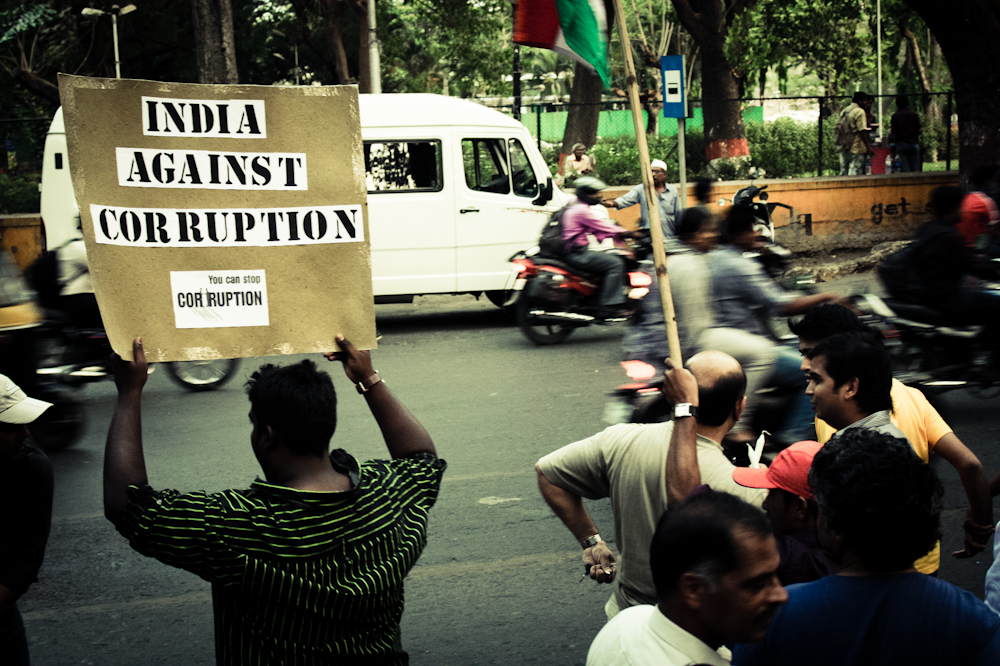
Preventing corruption in India


New amendments have been proposed to the Prevention of Corruption Act, 1988 (PCA). The amendments which were first proposed in 2013 have been revived with the aim of protecting honest government officials and encouraging a favorable decision making environment. The amendments have been approved by Cabinet as well as Rajya Sabha.

This is specially highlighted after Harish Gupta, a former secretary in coal ministry was summoned by courts in the alleged Coal Scam which came to light under the previous United Progressive Alliance government. According to newspaper reports, Gupta's case has received more attention because he is recognized as an officer of impeccable professional integrity by his peers. It was also reported that Gupta confessed 'wrongdoing' because he did not have patience and resources to face a trial. 

An investigator’s take

PaGaLGuY spoke to a retired officer of Central Bureau of Investigation (CBI) who has worked in the Anti-Corruption branch of the agency to get a better perspective on the issue. He said, “The proposed amendments narrow down the existing definition of corruption. Words like ‘illicit enrichment, one’s control and disproportionate assets are terms that include all aspects needed for investigating corruption charges.” He further added, “A balance has to be maintained between punishing a corrupt public servant and giving an honest one an opportunity to explain his side. This balance is being maintained here.”

To make things more clear, the retired official quoted former Prime Minister Manmohan Singh who once said that many decisions are taken in an atmosphere of uncertainty, when not all facts are known. So, in hindsight these decisions may appear different. The officer agreed that the provision of making permission compulsory to initiate an inquiry for officials above the rank of Joint Secretary acts more as a hurdle. This is because such permissions are delayed or worse never given due to the proximity of these officers to political executives. So, such a provision end up being a hindrance for investigators. 

“The burden to prove a case better lie with the investigator”, said the officer. “A law should not lead to unnecessary hounding of government servants or create an atmosphere of fear/witch-hunting. Such an environment will be detrimental to overall progress of the country”, the official said referring to critics opposing the amendments.

Proposed amendments and key issues 

  • Criminal misconduct to only cover misappropriation of property and possession of disproportionate assets to income. Proving intention behind misappropriation rests with investigating agency. Corruption in not always in cash but also in kind. By not considering favors in kind, a large loophole is being left unattended. Typically, this would include favors shown in return for better postings, post-retirement benefits among others which are punishable under the current law. To reinforce this, section 13 (1)(d) now reads that benefits which are other than economic are not punishable.
  • Section 13 (1)(d)- the only section in the act which allows investigation of government officials has been removed.
  • Bribe-giver and bribe-taker equally liable for punishment. Bribe can be given under collusion or coercion. It was suggested by Law Commission that if bribe giver is under coercion, he/she should not be punished as it would deter people from lodging a complaint. But this has been ignored as is evident.
  • Single Directive- a government order passed in 2003 which made prior sanction compulsory to prosecute senior officials (rank of Joint Secretary and above) has made a comeback. This means prior sanction to prosecute serving government officials compulsory. The Single Directive was declared illegal in Vineet Narain Case of 1997 by the Supreme Court (SC). It made a comeback in 2003 as a provision of law and it continued till 2014. In 2014, SC declared it as unconstitutional. But powerful bureaucracy seems to attempt to make this immunity legal, a third time.
It is clear from this debate that, corruption as a social malaise does not occur in isolation. It is part of the society and will require an effort which involves all stakeholders like government, police, civil society and most importantly citizens.

Daily Current Affairs for Competitive Exams: December 21, 2016

National 

Indian Enterprise Development Service to be created 
  • Union cabinet has passed a resolution for creation of a new service Indian Enterprise Development Service (IEDS).
  •  IEDS will function under Office of Development Commissioner, Ministry of Micro,  Small and Medium Enterprises (MSME) 
  • The service is being created with the aim of achieving targets under ambitious programs like Start Up India, Stan Up India and Make in India.
  • An All India Service can be created if Rajya Sabha declares in a resolution supported by not less than two-thirds of members present and voting under Article 312.
Long Range subsonic missile Nirbhay successfully test fired
  • Nirbhay is a long range surface-to-surface nuclear-capable subsonic cruise missile developed indigenously by the Defence Research and Development Organisation (DRDO).
  • Nirbhay is nuclear capable missile with a speed of 0.7 Mach. It can strike a target at a distance of 700-1000 Kms.
  • It is a terrain hugging missile which keeps on encircling the area of its target for several minutes and then hits bull’s eye’ on an opportune time. It is difficult to detect by enemy’s radars.
Maharashtra to have a separate ministry for Other Backward Classes (OBC)
  • A Ministry for OBC will be created in Maharashtra.
  • A first of its kind in any state, it will deal with all issues related to OBCs. OBCs form more than 35 per cent of the state's population.
  • OBCs  category were identified by the Mandal Committee report, 1980 as being eligible for reservation in governemnt jobs and higher education. They have a reservation of 27 per cent. 

International

First ever vaccine for Chikungunya developed in US
  • Researchers from United States have developed the first vaccine for Chikungunya fever made from an insect-specific Eilat virus.
  • Chikungunya is a mosquito-borne virus that causes the disease. It is transmitted by Aedes aegypti and Aedes albopictus mosquitoes. Its symptoms are characterised by abrupt fever and severe joint pain, often in hands and feet, and may include headache, muscle pain, joint swelling or rash. There is no specific antiviral drug treatment for chikungunya.
  •  Chikungunya treatment is directed primarily at relieving the symptoms, including the joint pain using anti-pyretics, optimal analgesics and fluids.

SSC CGL Tier 2 Re-Exam 2016 to be conducted on January 12, 13, 2017

 
SSC to conduct Re-Exam for CGL Tier 2 on January 12, 13, 2016 
In a notification published by the Staff Selection Commission (SSC) on December 21, 2016, the commission has released tentative dates for the Combined Graduate level Tier 2 2016 exam. The Commission has decided to conduct re-examination for SSC CGL Tier 2 2016, tentatively on January 12, 13, 2017.

There was widespread mismanagement reported at exam centers across the country, after which the commission received representations from candidates alleging that they faced technical and other related problems during the examination at some of the venues. The Commission objectively scrutinised the representations received till December 9, 2016.

The Commission, after due examination of video footages, has taken a serious view of certain candidates found to have been actively involved in disturbing and instigating other candidates to disrupt the process of the examination. The Commission proposes to take appropriate action against such candidates, which may include disqualification and debarment for a period of three years, in consonance with the extant guidelines.

The SSC CGL Tier 2 2016 Exam was conducted by the SSC for 1,49,330 candidates in the online Mode on November 30 and December 2, 2016.

SSC conducts various exams throughout the year and recruits eligible candidates to various posts in government offices and departments as Assistant Audit Officer, Inspector (Examiner) (CBEC), Income Tax Inspector (CBDT), Assistant (MEA), Compiler (Registrar General of India), Senior Secretariat Assistant, Accountant (Offices under C&AG, CGA & others), Tax Assistant (CBEC & CBDT), Statistical Investigator and Sub-Inspector (Central Bureau of Narcotics) among others.

From 2016, there will be no personal interviews in tier 3 of the exam. Tier 3 now consists of computer proficiency test/data entry skill test (wherever applicable) and document verification only. Marks secured by candidates in tier 1 will be considered while selecting them for computer test and also for final selection (See page 17). As per reports, the tier-3 exam would tentatively be conducted in January 2017, while the final result will be announced in April 2017.

Click here to check tentative cut offs for SSC CGL Tier 2 2016

Daily Current Affairs for Competitive Exams: December 19, 20, 2016

National

Environmentalist Anupam Mishra no more
  • Mishra traveled to villages across India describing the value of time-tested systems of water harvesting. He also advocated conservation of traditional water structures in India and abroad.
  • Mishra was awarded the 1996 Indira Gandhi Paryavaran Puraskar (IGPP) award instituted by the Ministry of Environment and Forests, Government of India. The award is given to those who have made a measurable impact on environment protection.
  • Books authored by Mishra- Aaj Bhi Khare Hain Talaab (Lakes are still Standing, 1993) and Rajasthan Ki Rajat Boondein (Radiant Raindrops of Rajasthan, 1995).
Garv II, mobile app launched to monitor rural electrification
  • Ministry of Power has launched Garv II, which helps citizens track rural electrification on a real-time basis.
  • The progress is being monitored under Deen Dayal Upadhyay Gram Jyoti Yojana (DDUGJY).
  • The app has SAMVAD, a window which aims to improve people participation. It  forwards feedback received from people to  concerned authorities through SMS/email.
Dead zone discovered in Bay of Bengal
  • An area of around 60,000 sq. km in Bay of Bengal has been discovered by scientists of National Institute of Oceanography which is a dead zone
  • Dead zone is an area in oceans which has low oxygen concentration. Lack of oxygen is harmful to marine life leading eventually to their death. The main cause for forming of a dead zone is nutrient pollution.  

Sports

Karun Nair scores triple century in Tests
  • Karun Nair became the second Indian cricket player to score a triple century (300 runs) in the fifth test match at Chennai where India played against England
  • First Indian cricket player to score two triple centuries in test matches is Virendra Sehwag.
  • Other players to score a triple century more than once are Donald Bradman of Australia and Brian Lara and Chris Gayle of West Indies. 

RESULT OF SURPLUS QUALIFIED CANDIDATES OF LGO EXAMINATION,2O15-16 HELD ON 31.O7.2O16 - WEST BENGAL

Download LGO Examination Results of Surplus Qualified Candidates in West Bengal Circle by clicking the below mentioned link.
Order No:RECTT./X-13LLGO EXAM/2015-16 /SURPTUS dated 02.01.2017