Showing posts with label General Knowledge. Show all posts

Apr 9, 2018

Who is Sathish Sivalingam?

Sathish Sivalingam celebrates winning gold during the Men’s 77kg Weightlifting Final at the Gold Coast 2018 Commonwealth Games. | Photo Credit: Getty Images


The weightlifter from Vellore bagged a gold medal at the 77kg category at the Commonwealth Games


Early on Saturday, Tamil Nadu weightlifter Sathish Sivalingam won a gold medal in the 77 kg weight class at the 2018 Commonwealth Games in Gold Coast, taking India's gold medal tally to three. Sathish was the fifth Indian weightlifter to join India's medals tally.


Sathish had also won gold at the 2014 Commonwealth Games in the same weight category, with the 149kg snatch and 179kg clean and jerk lifts, totalling 328kg. His lift of 149kg in snatch continues to be the Games record. At Gold Coast, he had a combined total of 317 kg (144kg + 173 kg).


A native of Vellore, Sathish was trained in his early years by his father Sivalingam, a former weightlifter who won gold medals at the national level.


Sathish started training at a local gym before furthering his training at the National Institute of Sports in Patiala. He dropped out of college in his third year when he got a job in the Railways.


Ahead of the 2014 Glasgow Games, Sathish trained for a while in Birmingham to get acclimatised to the conditions and food. It paid off as he edged out Ravi Katulu and Australia's Francois Etoundi to claim gold, his lift of 149kg in the snatch still a Games record.


Ahead of the Gold Coast event, Sathish wasn't expecting to win a medal, after having injured his thighs.


“I had no hopes of winning a medal after I injured my thighs during the National Championships while attempting 194kg in clean and jerk,” Sathish was quoted by PTI. “It’s a quadriceps problem, even now I am competing at less than ideal fitness but I am glad that was enough to get me a gold.”


“I was in so much pain that even sitting was very painful for me. Everyone took care of me, gave me hope but I was not very confident. I had not trained that hard and my body was not at its best, and so how could I hope for a medal.”


Sathish expects more from himself at the 2018 Asian Games in Indonesia.


“I hope to do even better in the Asian Games because there is a gap now. Earlier Asian Games used to come within 20-25 days of CWG, which didn’t give us enough time to prepare. But this time I have got time to prepare and be fully fit now.”


Source : http://www.thehindu.com/

Aug 14, 2017

Justice Dipak Misra to be next Chief Justice of India

Justice Dipak Mishra will be the next Chief Justice of India.
The Union government on Tuesday appointed Justice Dipak Misra as the next Chief Justice of India.

He will be replacing incumbent Justice J S Khehar, who is set to retire on August 27. It was Khehar who had recommended Misra's name to succeed him as the next Chief Justice of India.

Justice Misra will be sworn in as the 45th Chief Justice of India by President Ram Nath Kovind on August 27.

The 63-year-old CJI-designate is the senior-most judge of the Supreme Court after Justice Khehar. He will be the third person from Odisha to be appointed the Chief Justice of India, after Justices Ranganath Misra and G B Pattanaik.

Source:-The Times of India

May 21, 2017

General Knowledge for Competitive Examination

1. Who authored the book ‘The Science of Bharat Natyam’?
(a) Saroja Vaidyanathan (b) Yamini Krishnamurthi ( c) J. Sushila (d) None of these
Answer a
2.International Day for Disaster Reduction is observed on:
(a) 9th August (b) 13th October (c) 24th November (d) 11th December
Answer- b
3. Tianhe 1A, the world’s fastest supercomputer is made by
(a) United States (b) Japan (c) China (d) None of these
Answer : c
4. Which is India’s first ever Pollution Control Warship?
(a) Samudra Prahari (b) Nischaya (c) Varuna (d) None of these
Answer: a
5. Who became India’s youngest grandmaster?
(a) Parimarjan Negi (b) Dronavali Harika (c) Praveen Thipse (d) S P Sethuraman
Answer: d
6. K C Kulich International Award is associated with:
(a) Medicine (b) Economics (c) Journalism (d) Sports
Answer: c
7. ‘Open’ is the autobiography of which sports personality?
(a) Adam Gilchrest b) Glenn Merges (c) Andre Agassiz (d) None of these
Ans-c
8. World Cup Football in 2022 is to be held at:
(a) Qatar (b) UK (c) Spain (d) France
Answer: a
9. Who is the first head of UN WOMEN?
(a) Laura Chinchilla (b) Julia Gillard (c) Mitchell blachettt (d) None of these
Answer: c
10.Which of the following committee is related to Corporatisation of Stock Exchanges?
(a) Bimal Jalan Committee (b) V Achuthan Committee (c) P M Nair Committee (d) None of these
Ans-a
11. Which is India’s newest stock exchange for currency derivatives?
(a) BSE (b) NSE (c) United Stock Exchange (USE) (d) None of these
Answer : c
12. Jeevan Reddy Committee is related to
(a)Illegal mining (b) Armed Forces Special Power Act (c) Environmental Impact Assessment (d) None of these
Ans-b
13. Which of the following scheme is related with social security for unorganised sector?
(a) Swabhiman (b) Sabla (c) Swavalamban (d) None of these
Ans-c
14. Polavaram Project is located in which state?
(a) Andhra Pradesh (b) Maharashtra (c) Madhya Pradesh (d) Karnataka
Answer: a
15. David Perlman Award is given in which field?
(a) Sports (b) Music (c) Photography (d) Journalism
Ans- d
16.Which of the following committee has redefined the definition of Slums?
(a) Pranab Sen Committee(b) Arjun Sen gupta committee (c) C Ibrahim Committee (d) None of these
Ans-a
17. Arrow-III is an anti missile system of
(a) France (b) Pakistan (c) Israel (d) UK
Ans-c
18. India’s first jail BPO is going to came up at:
(a) Bangalore (b) Pune (c) Chennai (d) Hyderabad
Answer: a
19.World’s first aviation university coming up at:
(a) Bangalore (b) Nice (c) Glasgow (d) Venice
Answer: a
20. Khoj lab has been launched by which group?
(a) Future Group (b) dell (c) IBM d) Times group
Answer: a
21.Which of the following became the first smoke Free State in India?
(a) Sikkim (b) Himachal Pradesh (c) Uttarakhand (d) None of these
Ans-a
22. Lightest element:- Hydrogen
Only Metal liquid at room temperature:- Hg Mercury
Tungsten symbol –W
Tin –Sn
Element with maximum number of compounds –Carbon (due to catenation)
22. Which of the following became the Ist Asian Country to sign Free Trade Agreement with European Union?
(a) South Korea (b) China (c) India (d) None of these
Ans-a
23. The Emissary’ is the book authored by:
(a) Tarun Tejpal b) Vinod Mehta (c) Aniruddh Bahl (d) None of these
Ans-c
24. Who is the new PM of Netherlands?
(a) Mark Ruttea (b) Bill Carey (c) Thakshin Sinawatra (d) None of these
Ans-a
25. Who is the new PM of Kosovo?
(a) Hashim Taci (b) N K Name Krumoh (c) Jose Borosso d) None of these
Ans-a
26. Who is the chairman of National Democratic Front of Bodoland?
(a) Paresh Barna (b) Aravind Rajakhowa (c) Ranjan Daimary (d) None of these
Ans-c
27. With which of the following countries India has not signed civil nuclear agreement?
(a) Namibia (b) Sweden c) Mongolia (d) Argentina
Ans-b
28. Who is the PM of Sweden?
(a) Fredrick Rainfeldt (b) Silvio Berlusconi (c) Garry Wanders (d) None of these
Ans-a
29. APEC Summit in November 2010 was held at :
(a) Yokohama (b) Sydney (c) Singapore (d) Busan
Answer a;
30. Which public sector bank was the banking partner in Commonwealth Games 2010?
(a) Central Bank of India (b) State Bank of India (c) Bank of Baroda (d) None of these
Answer-a;
31. Who is the new vice chief of army staff?
(a) V.K. Singh (b) A.S. Lamba (c) C. Shekhawat (d) None of these
Answer : b
32. Who has become the vice president of ICC?
(a) Ehsaan Mani (b) John Mulford (c) Alan Isaac (d) Molcom Speed
Answer: c
33. Who is the Director General of National Investigation Agency ?
(a) R.V. Raju (b) Ved Marwah (c) K.F. Rustomji (d) Sharad Chandra Sinha
Answer: d
34. Who is the Director of National Security Guard?
(a) R.K. Medhekar (b) J.K Dutt (c) B.K. Banerjee (d) None of these
Answer: a
35. Who of the following Indian got the Australia Day achievement medal 2010?
(a) V.P. Unnikrishnan (b) Sandeep Pandey (c) Vandana Shiva (d) None of these
Answer: a
36. Which of the following country became the 187th member of IMF?
(a) Marshall Islands (b) Tuvalu (c) Fiji (d) None of these
Answer: b
37. India’s second National Institute of Design will come up at which of the following
(a) Amethi (b) Jorahat (c) Aizowl (d) Itanagar
Ans- b
38. Benghazi is a port of:
(a) Libya (b) Yemen (c) Egypt (d) None of these
Answer: a
39. Jakhol Sankri Hydro Electric Project has been commissioned at
(a) Uttarakhand (b) Himachal Pradesh (c) J&K (d) Arunachal Pradesh
Answer: a
40. ‘Home Boy’ is a novel written by
(a) H M Naqvi (b) H S Narula (c) Anand Sarkar d) Stephen Lipsettan
Ans A
41. Pravasi Bhartiya Divas in 2011 was held at:
(a) Jaipur (b) New Delhi (c) Ujjain (d) Varanasi
Answer : b
42. 98th Indian Science Congress in January 2011 was held at:
(a) Chennai (b) Kharagpur (c) Kanpur (d) Delhi
Ans - a
43. Who of the following is the present Lokayukta of Karnataka:
(a) N Vittal (b) Santosh Hegde (c) Yashwant Sonawane(d) None of these
Answer:b
44. Georgia’s capital is to be shifted from Tbilisi to:
(a) Akhan (b) Yeren (c) Kutaisi (d) Chisinau
Ans-c
45. Which country topped the Terrorism Risk Index in 2010:
(a) Somalia b) Samoa (c) Jamaica (d) Iraq
Ans-a
46. Which district is going to be named after Indira Gandhi? 
(a) Medak (b) Rai Bareli (c) Chikmaglur (d) Bellary
Ans: a
47. Who received the Elis Island Medal of Honour in 2010?
(a) Dalai Lama (b) Zinedine Zidene (c) Rao Anumlu (d) B K Varghese
Answer: c
48. Enam Securities is to be purchased by:
(a) Union Bank of India (b) BNP Paribas (c) ANZ Grindlays (d) Axis Bank
Answer: d
49. Which famous personality bagged the Man of Peace Award in 2010?
(a) Roberto Baggio (b) Diegs Maradona (c) Pope John Paul II (d) None of these
Answer: a
50. Who is the new National Security Advisor of United States?
(c) W Singham (d) Thomas Donilon
(a) Colin Powell (b) Larry Page
Ans-b
51. Who is the new president of UN General Assembly?
(a) Joseph Deiss (b) Hans Rasmus Sen (c) Leon Panetta (d) None of these
Ans-a
52. Luka and Fire of Life is the latest book by:
(a) Arun Som (b) Salman Rushdie (c) Vikram Seth (d) None of these
Ans-b
53. What is the name of India’s latest and Seventh Super Computer?
(a) Annapurna (b) Param (c) Pinak (d) None of these
Ans-a
54. Tembli became the first village in India to get UID. In which state it is located?
(a) Andhra Pradesh (b) Chattisgarh (c) Maharashtra (d) None of these
Ans-c
55.Who has been declared the ‘Business Leader of the year’ in Economic Times Corporate Excellence Awards 2010?
(a) Aditya Puri (b) N Nrayanmurthy (c) Azim Premji (d) Mukesh Ambani
Ans-a
56. What is the mascot of 2011 cricket world cup?
(a) Hoho (b) Cobe (c) Stumpy (d) None of these
Ans-c
57. SAF (South Asian Federation) games in 2012 will be held at
(a) Kathmandu (b) Delhi (c) Bangalore (d) None of these
Ans-b
58. Agni III was launched from which of the following places:
(a) Wheeler Island (b) Sriharikota (c) Bikaner (d) None of these
 Ans : a
59. Who of the following is the Chairperson of National Green Tribunal?
(a) Lokeshwar Singh Parata (b) Anil Pandey (c) K Vijay Kumar (d) None of these
Answer-a;
60. Which Indian Company is slated to buy the English football club Blackburn?
(a) U B groups (b) RPG (c) Videocon (d) Vicky
Answer : d
61. Who is the Union Minister of Corporate Affairs?
(a) Murali Deora (b) Jaipal Reddy (c) C P Joshi (d) M S Gill
Answer: a
62. Who is the new President Elect of BCCI?
(a) Chirayu Amin (b) Jyotiraditya Schindia (c) Shashank manohar (d) Jagmohan Dalmia
Answer: c
63. Karrar is the unmaned bomber aircraft of which country?
 (a) Iran (b) Syria(c) Israel (d) None of these
Answer:a
64. Who is the CMD of Nuclear Power Corporation of India Limited?
(a) S K Jain (b) Harsh Marital (c) Oskar Singh (d) None of these
Answer: a
65. Who is the Director of Intelligence Bureau?
(a) Rajeev Mathur (b) Nehchal Sandhu (c) Saikat Dutta (d) None of these
Answer: b
66. Ramagundanar thermal power project is in which state?
a) Andhra Pradesh (b) Tamil Nadu (c) Kerala (d) Karnataka
Ans- a
67. Project Big Green has been initiated by which company?
(a) Microsoft (b) Apple (c) Infosys (d) IBM
Answer:d
68. Vansadhara River dispute is between which states?
(a) Orissa and Andhra Pradesh (b) Karnataka and Tamil Nadu (c) Kerala and Tamil Nadu (d) None of these
Answer: a
69. Who is the Chairperson of National Housing Board?
(a) B N Kapoor (b) Mata Prasad (c) R B Verma (d) None of these
Ans- c
70. Who is India’s permanent representative to United Nations? 
(a) Hardeep Singh Puri (b) M.K. Agnihotri (c) Vijay Pasricha (d) None of these
Ans; a
71. Who is the principal scientific advisor to Government of India?
(a) R. Chidambaram (b) V.K. Saraswat (c) T.K. Thomas (d) None of these
Ans - a
72. Who is the Chairman of Central Water Commission?
(a) Balraj Madhok (b) A.K. Bajaj (c) Shivran Puri (d) None of these
Ans - b
73. Who is the Deputy National Security Advisor?
(a) Shiv Shankar Menon (b) M.K. Narayanan (c) Shekhar Dutt (d) None of these
Answer: c
74. Aligarh Muslim University is going to set its new campus at:
(a) Saharanpur (b) Meerut (c) Murshidabad (d) Azamgarh
Ans-c
75. Who is the new Chairperson of National Commission for Backward classes?
(a) M.N. Rao (b) T.K. Maken (c) Ram Singh Senbar (d) None of these
Ans- a
76. Who is the Chairperson of 19th Law Commission?
(a) P.V. Reddy (b) A.K. Lakshmanan (c) K.R. Kurup (d) None of these
Ans- a
77. Who is the Chairman of National Commission for Protection of Child Rights?
(a) Buta Singh (b) M.K. Kurup (c) Shanta Sinha (d) Dheeraj Rohatgi
Answer: c
78. Mini Pravasi Bhartiya Diwas in October 2010 was held at:
(a) Cape Town (b) Durban (c) Johannesburg (d) None of these
Answer: b
79. G-8 summit in June 2010 was held at:
(a) Ontario (b) Vancouver (c) Huntsville (d) Quebec
Answer:-c
80. Who is the CEO of Twitter?
(a) Dick Costello (b) Jorma Olila (c) Allan Bolt (d) None of these
Ans-a
81. Which country topped the Global Peace Index Report in 2010? 
(a) New Zealand (b) Iceland (c) Denmark (d) Sweden
Ans : a
82. Who of the following is the recipient of Turner Prize 2010?
(a) Alex Rodriques (b) Sergie Bryan (c) Susan Philipsz (d) None of these
Ans-c
83. Who is the Chairperson of Railway Board?
(a) Vivek Sahay (b) J P Batra (c) D P Aggarwal (d) None of these
Ans-a
84. Who of the following is the recipient of Cervantes Prize 2010?
(a) John Stocker (b) Ana Maria (c) C Andrew Stephen (d) None of these
Ans-b
85. Who founded the Telangana Praja Front in October 2010?
(a) G V Rao (b) K Chandrashekhar Rao (c) N Srinivas (d) None of these
Ans-a
86. M. B. Shah Commission is related to:
(a) Illegal mining (b) Agricultural Statistics (c) Microfinance Institutions (d) None of these
Ans-a
87. Who is the secretary General of Rajya Sabha?
(a) T.K. Vishwanathan (b) Vivek Agnihotri (c) V.K. Gupta (d) None of these
Ans-b

Jan 31, 2017

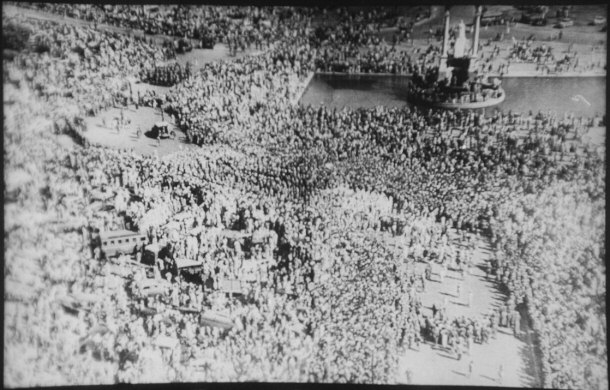
Why January 30 is observed as Martyr’s Day in India?

A file photo of funeral procession of Mahatma Gandhi.
Today, January 30, is observed as National Martyr’s Day in India. This day is observed as a mark of respect for the leading figure of India’s freedom struggle, Mohandas Karamchand Gandhi fondly known as Bapu or the Mahatma. On Martyr’s Day, the President, the Vice President, the Prime Minister, the Defence Minister, and the three Service Chiefs gather at the Samadhi of Mahatma Gandhi at Rajghat and lay wreaths on the Samadhi decorated with multi-colour flowers. The armed forces personnel blow bugles sounding, ‘The Last Post’. The inter-services contingent reverse arms as a mark of respect to the martyrs.
Mahatma Gandhi was assassinated by Nathuram Godse on January 30, 1948 during a morning prayer meeting held at Birla Bhavan in Delhi. The place where Gandhi fell is called Rajghat.
Sailen Chatterjee, a veteran journalist, then working for the United Press of India (UPI) at its New Delhi office, was one of the first to report the incident. Chatterjee had accompanied Gandhi during the Noakhali riots of 1946 and had seen closely how Gandhi had managed to put an end to the violence. Chatterjee has lucidly described the events that took place on January 30 morning of 1948 as he was present at the prayer meeting. When he reported the news of Gandhi’s assassination, no one in UPI believed him. Chatterjee has described the assassination of Gandhi as a ‘dark night’ in history of India. In one of the later published stories, he narrated how Sardar Vallabhbhai Patel and Jawaharlal Nehru stood side by side weeping and consoling each other. About Gandhi’s cremation, Sailen observed, “A mass of humanity had crowded in Delhi on that occasion.”
The assassin
Nathuram Godse, the assassin, was influenced by the ideology of the Hindu Mahasabha (HMS), was an organisation which had a different and extremist outlook towards the freedom struggle. The main goal of HMS was to establish India as a one religion nation state, based on the European idea of a nation state. This was at loggerheads with the idea of India as a multi-religious nation-state which the freedom struggle stood for. Social psychologist Ashis Nandy has identified the extreme behaviour of Godse to his growing up years. Godse was brought up as a girl. Nandy believes that this confusion about his sexuality led Godse to act in a manner that would reinforce his identity as masculine.
Few countries in Africa and Asia, which gained freedom from their colonisers at the same time as India, have been able to maintain the momentum towards progress. Either ways, no one can deny the role of Gandhi in helping India achieve its dream of self-rule.

Jan 30, 2017

General Awareness for Competitive Exams: January 23, 2017

Themes for 68th Republic Day

A tribute to Lokmanya Tilak on his 160th birth anniversary, art and lifestyle of Kutch, model government schools of Delhi, Skill India and Beti bachao beti padhao are among the themes for the Republic Day tableaux this year.
Highlights: 
  • A total of 23 tableaux would be on display at the ceremonial parade with 17 of them belonging to various states and Union Territories.
  • Six tableaux from Ministry of Micro, Small and Medium Enterprises, Ministry of Housing and Urban Poverty Alleviation, Ministry of Skill Development, Central Board of Excise and Customs, Council of Scientific and Industrial Research and Central Public Works Department (CPWD) will find their place at the 68th Republic Day on Rajpath.
  • States registering their presence this year include Goa, Odisha, Delhi, Tripura, West Bengal, Arunachal Pradesh, Maharashtra, Manipur, Gujarat, Lakshadweep, Karnataka, Himachal Pradesh, Haryana, Punjab, Tamil Nadu, Jammu and Kashmir and Assam.
  • The tableau by the Ministry of Skill Development and Entrepreneurship is based on the theme of 'Transforming India through Skill development', while that of the Ministry of Micro, Small and Medium Enterprises will be based on Khadi and Village Industries Commission.
  • Arunachal's Yak danceKarnataka's folk dancesTamil Nadu's dance 'Karakattam' and Tripura's tribal dance 'Hojagiri' will be represented in the tableau of the respective states, while Punjab will showcase "Jago Aiya".
  • Jago is a festive dance which would take place the night before a Punjabi wedding.
  • Delhi's tableau, which will be part of the parade after three years, has been set up as a model government school to portray the transformation in state-run schools and the recent initiatives taken by the government in the education sector.
  • Lakshadweep, which is participating in the parade after 23 years, will portray itself as an unexplored destination for "adventure sport-nature tourism" with premier diving spots, rich eco-system, marine wealth, coral reefs, silver sandy beaches and pristine waters.
  • The theme of Haryana's tableau is based on the popular "Beti bachao beti padhao" campaign, while that of Goa will focus on the state's musical heritage.
  • Pradhan Mantri Awas Yojna will be the theme of the tableau of the Ministry of Housing and Urban Poverty Alleviation. The Council of Scientific and Industrial Research's tableau will showcase 38 national laboratories.
  • 'Green India-Clean India' will be the theme of CPWD's tableau.

China commissions 31st stealth warship

China has commissioned its 31st stealth warship as it got its battle group under its first aircraft carrier ready amid tensions with the US and other nations over its assertiveness in the disputed South China Sea.
The People's Liberation Army Navy has commissioned its 31st Type-056 class corvette, marking a new addition to the world's largest fleet of modern corvettes.
Highlights:
  • With a maximum speed of 52 km/h, the ship features good manoeuvrability, a high-level of automation and stealth capability, and is capable of hitting aircraft, ships and submarines.
  • The CNS Ezhou with a hull number of 513 was delivered to the East Sea Fleet in a naval base in East China's Fujian province.
  • The ship will perform coastal patrol, fishery escort, anti-submarine and anti-ship operations.
  • It is the second ship that has been commissioned to the PLA Navy since the start of 2017, following the CNS Kaiyangxing, a Type-815A class electronic reconnaissance ship, which now belongs to the North Sea Fleet.
  • Russia has the world's largest corvette group that consists of about 80 vessels, but most of them were built in the 1980s and 1990s and cannot compete with the Type-056 in terms of technology and equipment, the report quoted defence observers as saying, adding that China's fleet is now the biggest force of modern corvettes of all navies.

Delhi airport bags CSR award

GMR Group-led consortium Delhi International Airport Ltd. (DIAL) has bagged the prestigious Golden Peacock Award for Corporate Social Responsibility in the aviation transport sector for 2016.
What
  • The award was presented at a special presentation ceremony during the 11th International Conference on Corporate Social Responsibility.
  • The award reaffirms our commitment towards achieving exemplary results for our society while following the best practises.
  • The Golden Peacock Awards were founded by the Institute of Directors, India, in 1991 and are globally regarded as a benchmark of corporate excellence.
  • The National Quality Award Scheme was instituted to encourage total quality improvements in both manufacturing and service organisations in India.
  • Over 325 responses were received for the annual awards this year, of which 191 shortlisted applications were subjected to a three-tier assessment process for final selection.
  • Earlier, DIAL also won the 6th EPC World Awards for its contribution in the infrastructure and construction sector.
  • The Delhi airport has been adjudged as the world's no. 1 airport in ACI ASQ survey in the 25-40 million passengers per anum category for two consecutive years from 2014.

Jan 27, 2017

General Awareness for UPSC, SSC, Banking: January 22, 2017

President's Ordinance clears way for Jallikattu

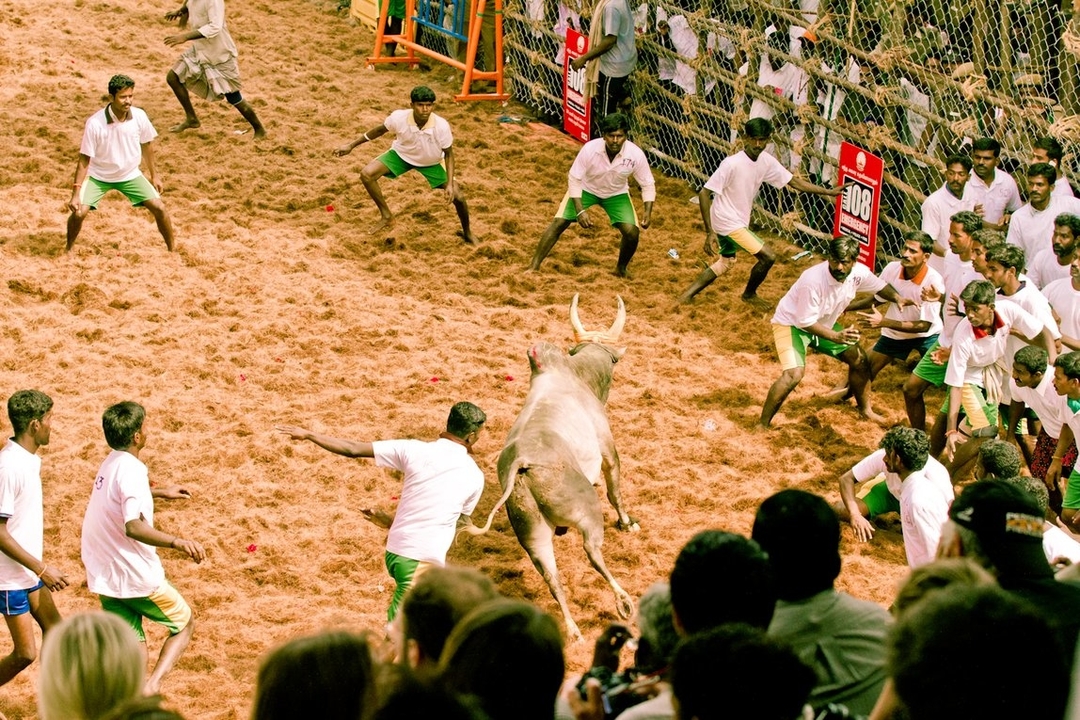
The President of India and the Governor of Tamil Nadu gave their nod to an ordinance allowing the bull-taming sport of Jallikattu in Tamil Nadu. This marks the end of a five-day protest by students and youth across the state. Jallikattu will now take place after a gap of three years on January 23, 2017, across Tamil Nadu.Tamil Nadu Chief Minister O Panneerselvam is expected to inaugurate a Jallikattu event in Alanganallur, Madurai district, which is famous for the sport. In other areas, ministers from respective regions will inaugurate the sport.
Highlights:
  • The assent for the ordinance (amending the PCA Act) has been obtained from the President and the Governor also.
  • Draft Bill to replace the ordinance and amend the PCA Act paving the way for holding Jallikattu without any hindrance will be introduced and adopted in the Assembly session, which begins on January 23.
  • The sport was banned by the UPA government in 2011 on grounds of cruelty against animals. In May 2014, the ban was reinforced by the Supreme Court, stating that bulls cannot be used as performing animals including bullock-cart races. Since then, people have been urging the central government to take steps to allow the sport.
  • This time around, thousands of students took to the streets and camped at locations like Marina Beach in Chennai for more than five days, unwilling to relent till the state and the central government had to take steps to revoke the ban.

India’s inputs in IPCC report

The next report of the IPCC (Intergovernmental Panel on Climate Change) due in 2018 will carry India’s inputs on climate change assessment generated by an indigenous modelling system.
Highlights:
  • India’s inputs were not given in the last five IPCC reports because so far we were relying on climate change models developed by other countries. Now we have our own model.
  • The IPCC reports highlight the causes and impact of global warming and climate change on regions across the world.
  • The statistical and high performance computing systems employed by India had consistently improved weather prediction and climate projection capabilities.
  • The country’s climate change modelling was set to improve further with the acquisition of a 10 Peta Flop super computer by the Indian Institute of Tropical Meteorology (IITM), Pune, in June this year.
  • “IITM is upgrading from the 1.2 Peta Flop machine which no longer matches our requirements. The tender for the new computer will be floated next week. It will be the most powerful supercomputer in the country.”
  • IPCC models suggested an increase in extreme temperatures, decrease in the number of rainy days, and increase in the intensity of rainfall during the monsoon. This, he said, would have serious implications for agriculture, requiring a shift to short duration varieties and steps to harvest and store rainwater.

SWIFT security framework for banks

Rising instances of cyber attacks on banks had led to SWIFT, the global network that enables trillions of dollars transfers each day, to introduce a Customer Security Framework that mandates its member banks to upgrade their systems or face the threat of naming and shaming among other member banks.
Highlights:
  • Under this framework, banks have to adhere to 16 mandatory controls and 11 advisory controls, and requires each bank to confirm compliance on an annual basis.Banks which fail to adhere to these controls will be reported to the Reserve Bank of India as well.
  • There are certain mandates that we are making within the community now and if they don't comply with it, we will be publishing their names in the system.
  • SWIFT India started engaging banks to generate awareness about the new framework.
  • This framework will be released to member banks by the first quarter of the next financial year. While SWIFT will start collecting details on these mandatory controls from Q2 2017, the enforcement of mandatory requirements will start from January 2018.
  • SWIFT will then conduct inspections from internal and external auditors to ensure compliance of these controls.
  • Implementation of these standards will also increase security awareness and education in the on-going fight against cyber-related wire fraud.
  • In the last eight months, at least four government-owned banks were hit by hackers to create fake trade documents that may have been used to raise finance abroad or facilitate dealings in banned items.
  • As per the audit done with the current member banks, SWIFT has observed that there is a significant opportunity to strengthen the transaction banking channels of Indian banks.

Jan 23, 2017

General Awareness for UPSC, SSC, Banking: January 22, 2017

President's Ordinance clears way for Jallikattu

The President of India and the Governor of Tamil Nadu gave their nod to an ordinance allowing the bull-taming sport of Jallikattu in Tamil Nadu. This marks the end of a five-day protest by students and youth across the state. Jallikattu will now take place after a gap of three years on January 23, 2017, across Tamil Nadu.Tamil Nadu Chief Minister O Panneerselvam is expected to inaugurate a Jallikattu event in Alanganallur, Madurai district, which is famous for the sport. In other areas, ministers from respective regions will inaugurate the sport.

Highlights:

  • The assent for the ordinance (amending the PCA Act) has been obtained from the President and the Governor also.
  • Draft Bill to replace the ordinance and amend the PCA Act paving the way for holding Jallikattu without any hindrance will be introduced and adopted in the Assembly session, which begins on January 23.
  • The sport was banned by the UPA government in 2011 on grounds of cruelty against animals. In May 2014, the ban was reinforced by the Supreme Court, stating that bulls cannot be used as performing animals including bullock-cart races. Since then, people have been urging the central government to take steps to allow the sport.
  • This time around, thousands of students took to the streets and camped at locations like Marina Beach in Chennai for more than five days, unwilling to relent till the state and the central government had to take steps to revoke the ban.

India’s inputs in IPCC report

The next report of the IPCC (Intergovernmental Panel on Climate Change) due in 2018 will carry India’s inputs on climate change assessment generated by an indigenous modelling system.

Highlights:

  • India’s inputs were not given in the last five IPCC reports because so far we were relying on climate change models developed by other countries. Now we have our own model.
  • The IPCC reports highlight the causes and impact of global warming and climate change on regions across the world.
  • The statistical and high performance computing systems employed by India had consistently improved weather prediction and climate projection capabilities.
  • The country’s climate change modelling was set to improve further with the acquisition of a 10 Peta Flop super computer by the Indian Institute of Tropical Meteorology (IITM), Pune, in June this year.
  • “IITM is upgrading from the 1.2 Peta Flop machine which no longer matches our requirements. The tender for the new computer will be floated next week. It will be the most powerful supercomputer in the country.”
  • IPCC models suggested an increase in extreme temperatures, decrease in the number of rainy days, and increase in the intensity of rainfall during the monsoon. This, he said, would have serious implications for agriculture, requiring a shift to short duration varieties and steps to harvest and store rainwater.

SWIFT security framework for banks

Rising instances of cyber attacks on banks had led to SWIFT, the global network that enables trillions of dollars transfers each day, to introduce a Customer Security Framework that mandates its member banks to upgrade their systems or face the threat of naming and shaming among other member banks.

Highlights:

  • Under this framework, banks have to adhere to 16 mandatory controls and 11 advisory controls, and requires each bank to confirm compliance on an annual basis.Banks which fail to adhere to these controls will be reported to the Reserve Bank of India as well.
  • There are certain mandates that we are making within the community now and if they don't comply with it, we will be publishing their names in the system.
  • SWIFT India started engaging banks to generate awareness about the new framework.
  • This framework will be released to member banks by the first quarter of the next financial year. While SWIFT will start collecting details on these mandatory controls from Q2 2017, the enforcement of mandatory requirements will start from January 2018.
  • SWIFT will then conduct inspections from internal and external auditors to ensure compliance of these controls.
  • Implementation of these standards will also increase security awareness and education in the on-going fight against cyber-related wire fraud.
  • In the last eight months, at least four government-owned banks were hit by hackers to create fake trade documents that may have been used to raise finance abroad or facilitate dealings in banned items.
  • As per the audit done with the current member banks, SWIFT has observed that there is a significant opportunity to strengthen the transaction banking channels of Indian banks.

Jan 10, 2017

Editorials for Competitive Exams: Long term steps to boost Agricultural growth


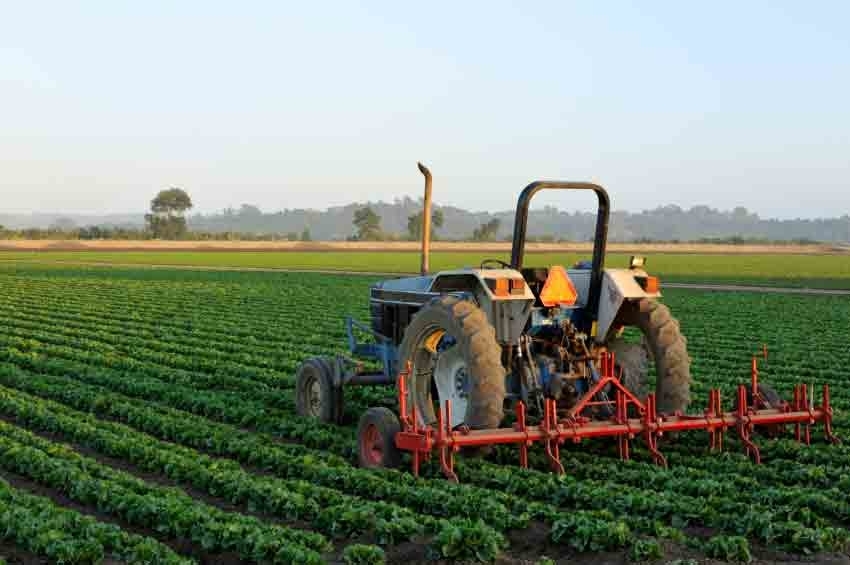
Agriculture was at the centre-stage of priority sectors for the government in 2016, upstaged only at the fag-end of the year by the demonetisation drive of the government. Significantly two consecutive droughts did not dampen the indomitable spirit of Indian farmers who, as per the fourth advance estimates for 2015-16 crop year, produced 252.22 million tonnes of foodgrains as against the output of 252.02 million tonnes last year.

There was a marginal dip in the output of rice, coarse cereals, oilseeds, pulses and cotton due to monsoon deficiency that hit kharif crops in parts of the country this year. Although rabi wheat yield was projected to be higher at 93.5 million tonnes in 2015-16 as against 86.53 million tonnes the previous year, procurement this year was lower than the set target, Agriculture and Farmers Welfare Minister Radha Mohan Singh said at a press conference in New Delhi on 29th December. To augment supplies and keep prices under check, it was decided to allow wheat import at zero per cent duty on private account.

The government has assured farmers that it will procure more foodgrains for the Public Distribution System and swiftly intervene in the market to ensure that wheat growers get the minimum support price, which is set at Rs. 1625 per quintal for 2016-17 marketing season. Needless to say, the government is closely monitoring the situation.

In a way, the year 2016 saw digitisation of the agriculture sector in a big way with mobile apps being launched in quick succession. The Agriculture Ministry launched Kisan Suvidha for weather information, market prices and crop diseases; PUSA Agriculture that gave information about new variety of seeds and latest techniques; Agri Market that gives news about mandi prices in a radius of 50 kms from the location of a farmer; Crop Insurance relating to all information about fasal bima; Crop Cutting Experiments for asking for crop cutting experiments. Lakhs of farmers have benefitted from downloading these apps.

This year, not only was the limit for farm sector lending by formal banking system raised to an all-time high of Rs. 900,000 crore, initiatives were taken—post-demonetisation—to encourage farmers to move towards cashless transactions and Direct Benefit Transfer of payments. If this happens it will be a big step towards easing out of middle-men/commission agents from mandi operations and a tiny measure to ensure that farmers get at least the minimum support price for the produce they bring to the market place.

Be that as it may, the year 2016 saw the government give high priority to the agriculture sector in order to address the major fundamental concerns about imbalanced use of fertilizers affecting soil health (issuance of soil health cards, neem-coated urea and organic farming) ill-effects of climate change hitting farmers’ income (fasal bima yojna) creating an electronic-platform market for seamless trade (National Agriculture e-Market) and bringing more land under irrigated farming (PM’s Krishi Sinchai Yojna). Related sectors of pulses, oilseeds, horticulture, fishery, livestock, milk, agro-forestry, bee-keeping, agriculture education, research and extension were also given focussed attention.

Pledging the government’s commitment to doubling farmers income by 2021, Finance Minister Arun Jaitley announced long-term measures and raised the agriculture outlay to Rs. 39894 crore from Rs. 15809 crore in the 2015-16 budget. In the interim, the sector is set to receive additional Rs 5000 crore from the Krishi Kalyan cess in supplementary budgets.

Apart from this, a Rs. 20,000 crore corpus fund has been created in collaboration with NABARD for the Pradhan Mantri Krishi Sinchai Yojna which is dedicated to bringing water to every field (Har Khet Ko Paani) through completion of last-mile projects and drip and micro-irrigation. An area of 76.03 lakh hectare is proposed to be brought under irrigation by 2019.

One of the ambitious programme launched during the year was the weather-based Pradhan Mantri Fasal Bima Yojna (PM’s Crop Insurance Scheme) for which Rs. 5500 crore were set aside. Under the scheme there will be no cap on who can be covered and the states and central government pick up 90 per cent of the premium. In this year’s kharif, 366.64 lakh farmers were covered under the scheme in 21 states.

Marketing of their produce and to get remunerative prices is the biggest concern of farmers for which over 250 mandis in 10 states have been integrated under the e-NAM (National Agriculture Market) portal for better price recovery and wider access. Till last week farm produce worth Rs. 7131.21 crore were transacted on this electronic platform bringing a never-before transparency in marketing.

To keep prices of pulses under check, the government set up a 2-million tonne buffer stock of pulses and augmented availability through imports as well as domestic supplies. At the same time, under the National Food Security Mission, the highest allocation was made for pulses and steps were taken to enhance production which had a cooling effect on prices. The production target for pulses next year is 20.75 million tonnes as against output of 16.47 million tonnes last year. Likewise, efforts were made to clear the bulk of the pending arrears of sugarcane farmers.

With effects of climate change threatening to adversely affect the farm sector, the government took a major initiative to revise the norms for compensation for damaged crop as a result of drought, floods and hail etc. Instead of 33 per cent, farmers who suffer 50 per cent crop damage shall be eligible for compensation. The outgo of funds to states under the National Disaster Relief Fund in the last two years has been Rs. 24,556 crore. Using modern technology, smart phones can be used for uploading pictures of damaged crop and drones will be used to assess damage.

The year also saw focus with renewed vigour on the second green revolution in eastern and north eastern states for meeting food security needs of a growing population. The growth of this sector is crucial to the overall economy. Expectations are that the farm growth rate this year will be higher than 1.1 per cent last year.

Jan 3, 2017

Preventing corruption in India


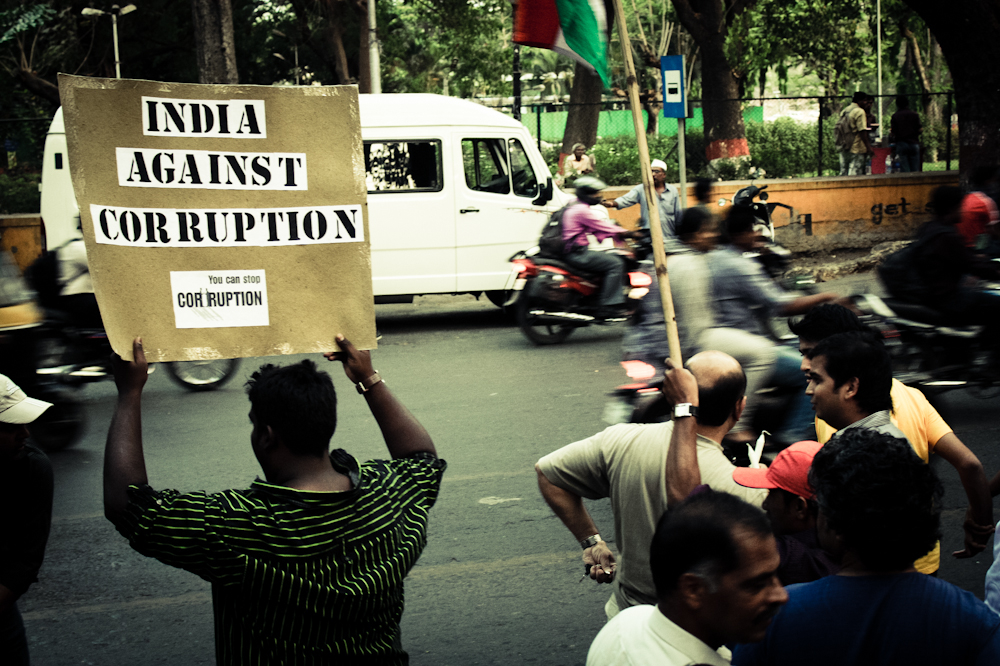
New amendments have been proposed to the Prevention of Corruption Act, 1988 (PCA). The amendments which were first proposed in 2013 have been revived with the aim of protecting honest government officials and encouraging a favorable decision making environment. The amendments have been approved by Cabinet as well as Rajya Sabha.

This is specially highlighted after Harish Gupta, a former secretary in coal ministry was summoned by courts in the alleged Coal Scam which came to light under the previous United Progressive Alliance government. According to newspaper reports, Gupta's case has received more attention because he is recognized as an officer of impeccable professional integrity by his peers. It was also reported that Gupta confessed 'wrongdoing' because he did not have patience and resources to face a trial. 

An investigator’s take

PaGaLGuY spoke to a retired officer of Central Bureau of Investigation (CBI) who has worked in the Anti-Corruption branch of the agency to get a better perspective on the issue. He said, “The proposed amendments narrow down the existing definition of corruption. Words like ‘illicit enrichment, one’s control and disproportionate assets are terms that include all aspects needed for investigating corruption charges.” He further added, “A balance has to be maintained between punishing a corrupt public servant and giving an honest one an opportunity to explain his side. This balance is being maintained here.”

To make things more clear, the retired official quoted former Prime Minister Manmohan Singh who once said that many decisions are taken in an atmosphere of uncertainty, when not all facts are known. So, in hindsight these decisions may appear different. The officer agreed that the provision of making permission compulsory to initiate an inquiry for officials above the rank of Joint Secretary acts more as a hurdle. This is because such permissions are delayed or worse never given due to the proximity of these officers to political executives. So, such a provision end up being a hindrance for investigators. 

“The burden to prove a case better lie with the investigator”, said the officer. “A law should not lead to unnecessary hounding of government servants or create an atmosphere of fear/witch-hunting. Such an environment will be detrimental to overall progress of the country”, the official said referring to critics opposing the amendments.

Proposed amendments and key issues 

  • Criminal misconduct to only cover misappropriation of property and possession of disproportionate assets to income. Proving intention behind misappropriation rests with investigating agency. Corruption in not always in cash but also in kind. By not considering favors in kind, a large loophole is being left unattended. Typically, this would include favors shown in return for better postings, post-retirement benefits among others which are punishable under the current law. To reinforce this, section 13 (1)(d) now reads that benefits which are other than economic are not punishable.
  • Section 13 (1)(d)- the only section in the act which allows investigation of government officials has been removed.
  • Bribe-giver and bribe-taker equally liable for punishment. Bribe can be given under collusion or coercion. It was suggested by Law Commission that if bribe giver is under coercion, he/she should not be punished as it would deter people from lodging a complaint. But this has been ignored as is evident.
  • Single Directive- a government order passed in 2003 which made prior sanction compulsory to prosecute senior officials (rank of Joint Secretary and above) has made a comeback. This means prior sanction to prosecute serving government officials compulsory. The Single Directive was declared illegal in Vineet Narain Case of 1997 by the Supreme Court (SC). It made a comeback in 2003 as a provision of law and it continued till 2014. In 2014, SC declared it as unconstitutional. But powerful bureaucracy seems to attempt to make this immunity legal, a third time.
It is clear from this debate that, corruption as a social malaise does not occur in isolation. It is part of the society and will require an effort which involves all stakeholders like government, police, civil society and most importantly citizens.

Dec 24, 2016

Important economic terms in news because of demonetisation

Virtual Payment Address (VPA)It is a virtual address which links a user's identity with his/her bank account. So, you can send/receive money by sharing your virtual payment address with any merchant site and make a payment. This eliminates the need to share private and confidential information like mobile number, bank account number or IFSC code.
Unified Payments Interface (UPI)An instant payment system which allows users to transfer money between any two parties’ bank accounts by using unique identifiers like mobile number or VPA without using account number / IFSC codes. It means sending or receiving money by entering a mobile number or VPA.
  • No bank account or credentials on third party applications or websites required
  • It allows sending collect requests to others (person to person or entity to person) with ‘pay by’ date to allow payment requests to be ‘snoozed’ and paid later, before expiry date without having to block the money in the account until customer is ready to pay. 
Bharat Bill Payment System (BBPS)
BBPS would include systems to facilitate collection of repetitive (monthly, bi-monthly, quarterly etc.) payments for everyday utility services provided by utility service providers like electricity, telephone, water, gas, and direct-to-home television. Gradually, the scope would be extended to include services facilitating the collection of repetitive payments, such as, school / university fees, municipal taxes/payments. Payments can be either made in cash or through any of the various electronic modes of payment through Operating units (OUs). OUs will act as an interface between consumers and utility service providers.
Seigniorage The difference between cost of producing currency notes and value of that money is called ‘seigniorage’. If seigniorage is positive, the government gains and vice-versa.
Tax to GDP ratio The tax-to-GDP ratio is the ratio of tax collected compared to the national Gross Domestic Product (GDP). This ratio helps in understanding the amount of economic activity in the country. If GDP grows, Tax to GDP ratio should ideally grow.
Real Time Gross Settlement (RTGS)
  • RTGS is a system of payment settlement. 'Real Time' means the processing of instructions at the time they are received rather than at some later time. 'Gross Settlement' means the settlement of funds transfer instructions occurs individually (on an instruction by instruction basis). Funds settlement is final and irrevocable because it takes place in the books of the Reserve Bank of India.
  • The minimum amount that can be remitted through RTGS is 2 lakh with no upper ceiling for transactions.
National Electronic Fund Transfer
  • The objective of the NEFT system is to establish an electronic funds transfer system to facilitate an efficient, secure, economical, reliable and expeditious system of funds transfer and clearing in the banking sector throughout India. While RTGS operates on gross settlements NEFT uses Deferred Net Settlement (DNS), which settles amount in batches. Amounts less than 2 lakh can be transferred. 
Immediate Payment System (IMPS)
 IMPS is an electronic funds transfer which takes place immediately from one bank to another through mobile phones. This facility is also extended to ATMs and internet banking. 
RuPay
 RuPay, a new card payment scheme launched by the National Payments Corporation of India (NPCI). Through RuPay, RBI aims to offer a domestic, open-loop, multilateral system which will allow all Indian banks and financial institutions in India to participate in electronic payments.